


Cribbage - Card Game
4.61.98K Reviews
App Specs
- Version
- 2.9
- Updated On
- License
- Free
- Downloads
- 500,000+
- Developer
- Topy Games
- Categories
- Card
- Platform
- Android, iOS
Screenshots
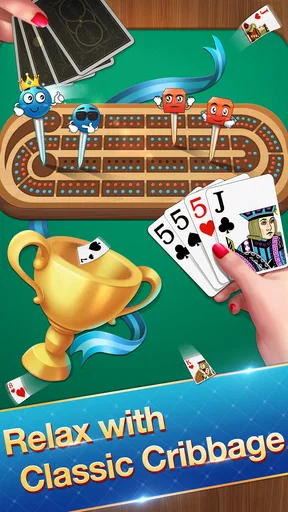
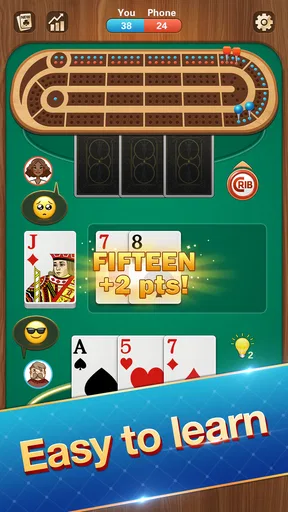
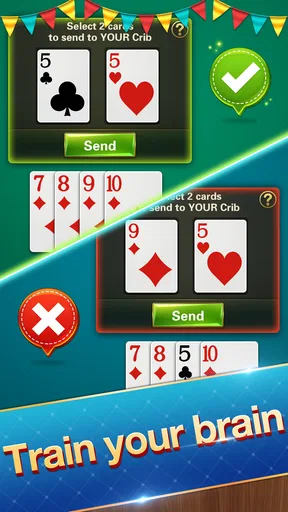
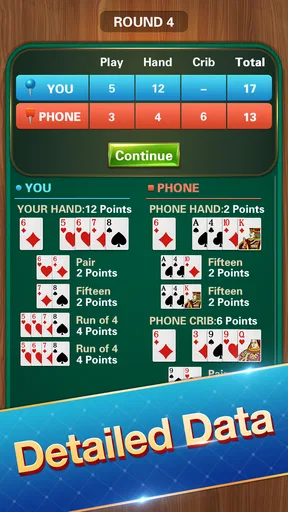
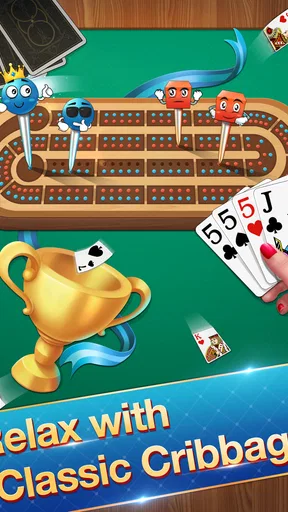
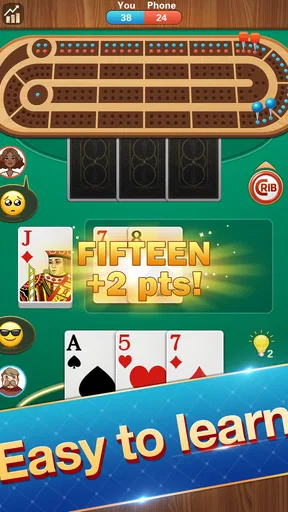
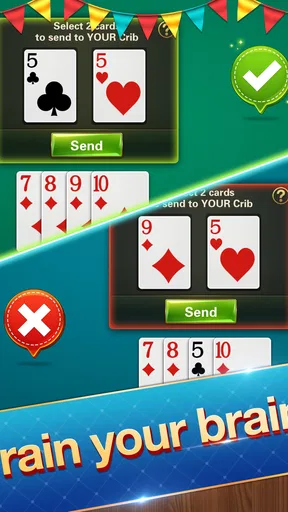
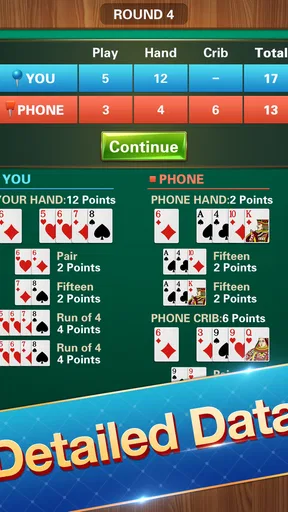
 Analysis by AppCompare
I enjoy card games that reward thought without demanding a long evening, and Cribbage - Card Game from Topy Games fits that space well. It takes the familiar cribbage format and turns it into a convenient mobile game for short sessions, quiet practice, or a relaxed match when I do not have a physical board nearby. The central appeal is not flashy presentation; it is the constant tension between choosing cards for immediate points and protecting myself from what might happen later.
This is a free card game for Android, with an Everyone age rating, and it runs on devices using Android 8.0 or later. The game has built a solid audience, with more than 500 thousand installs, a 4.6 average from roughly 12 thousand ratings, and about 2 thousand written reviews. Those figures suggest that the basic experience works for many players, but they do not remove the need to decide whether cribbage itself matches your taste.
My short answer is simple: I would recommend it to someone who already likes traditional card games or wants a compact strategy game with an element of chance. I would be more cautious with anyone looking for a highly social multiplayer experience, a deep campaign, or a game that explains every decision in detail.
What to consider before choosing this cribbage game
Before I make room for another cribbage app, I’d weigh how often I want to play alone, how much I value a physical board, and whether learning through repeated hands suits me. The free starting point makes a trial low-commitment, but the more important choice is whether this particular digital routine fits my habits. That leads to what it offers compared with the usual alternatives.
The rules matter more than the graphics
Cribbage is unusual compared with many popular mobile card games because scoring depends on combinations, counting, and timing rather than only on winning individual tricks. A hand can look ordinary until pairs, runs, fifteens, and other scoring possibilities are considered together. The separate crib also changes the way I evaluate every discard: a card that is weak in my hand may be very helpful to the opponent if I place it there.
That makes this a poor choice if I want something I can understand instantly without learning a scoring system. It is a much better fit when I enjoy gradually spotting patterns. The game’s strategy is approachable at the surface, but it has enough small decisions to stay interesting after the rules become familiar.
Short sessions are part of the appeal
I see this kind of game working particularly well during a commute, a waiting-room break, or a few quiet minutes before bed. Cribbage does not require the same uninterrupted attention as a long role-playing game, yet it is more mentally engaging than simply scrolling through a casual puzzle. I can play a hand, think about one decision at a time, and stop without feeling that I have abandoned a complicated story.
Worth Reading Before You Choose

EA SPORTS FC Mobile 26 Is a Bigger Football Game, but It Takes Time

Flipboard Shows What News Apps Must Do Beyond the Feed

Switching to Android Auto Means Rethinking Your Driving Routine

Google Calendar Makes a Crowded Week Easier to Manage

Ludo King Makes the Most of the Minutes Between Plans

Baby Panda World Brings Quick Play to Modern Phones, but Its Game Library Feels Busy
That convenience also creates a limitation. If I want a dramatic sense of progression, a large collection of unlockable content, or a strong narrative reason to keep playing, this is unlikely to satisfy me. Its appeal comes from replaying the card decisions, not from moving through a substantial world.
Chance is part of the design, not a flaw to eliminate
Good choices do not guarantee good results in cribbage. The deal can help or hurt, and the cut can change the value of a hand. I like that uncertainty because it prevents every match from becoming a fixed puzzle. At the same time, players who prefer complete control may find unlucky rounds frustrating, especially when a carefully planned hand is overtaken by a favorable combination for the other side.
The useful mindset is to judge decisions over many hands rather than treating one result as proof that a strategy worked or failed. I have found that this makes the game more satisfying: the goal is to improve the quality of my choices, not to force every random outcome in my favor.
Learning the scoring takes patience
The first few sessions can feel slower than expected because I am not only selecting cards; I am also checking how they combine during scoring. Beginners should resist trying to memorize everything immediately. I would start by learning the most common combinations, then pay attention to how discards affect both my hand and the crib.
One practical habit helps considerably: before discarding, I count the obvious value of my own hand, then imagine which discarded card could create a useful pair, run, or fifteen for the opponent. This two-sided check is more valuable than chasing the highest-looking hand in isolation. It is also the kind of habit that makes the game feel strategic rather than purely random.
What the current release means for a new player
The current version is 2.9, and the game was released on December 16, 2023. For someone deciding whether to install it now, the important point is that this is an established mobile release rather than a brand-new experiment. I would still approach it as a focused cribbage game, not as a broad card-game collection.
The price is free, which makes trying it easy. There are optional in-app purchases ranging from $1.99 to $6.99 per item. I would begin without spending anything and decide only after I know whether the rules, pacing, and overall presentation suit me. A free entry point is useful here because cribbage is a specialized format; not everyone will enjoy it enough to justify paying for extras.
Where Cribbage - Card Game wins over the usual choices
For me, the strongest case for this game is its focused convenience: I can return to cribbage without setting up a deck and board or waiting for a partner. That makes it a useful practice companion, especially when I want to work on one decision at a time rather than browse a collection of card games. The comparison also has limits, which are worth considering before switching.
It gives traditional cribbage a practical mobile form
The strongest reason to choose this game is convenience. A physical cribbage board has a particular charm, but it is not always available, and playing alone requires another person. A generic solitaire game is easier to start, yet it does not offer the same back-and-forth judgment about what to keep and what to place in the crib.
This app sits between those options. It preserves the identity of a recognizable card game while removing the need to set up cards, track points manually, or find a partner at the same table. For me, that makes it useful as a practice tool and as a quick way to revisit the game rather than a replacement for every social cribbage night.
The discard decision creates more depth than the simple interface suggests
The most interesting moments happen before the cards are scored. I often have to choose between a hand with a dependable baseline and a riskier group that could become excellent with the cut. The discard adds another layer because I am effectively helping create a separate scoring opportunity.
A useful advanced approach is to think in terms of damage control. If two discards give my hand similar value, I prefer the one less likely to create an obvious scoring combination for the opponent. That does not always produce the most exciting hand, but it can reduce the cost of a bad cut or an unfavorable deal. This is a decision many new players overlook because they focus only on their own cards.
It rewards learning without requiring a competitive identity
Some card games push players toward rankings, collecting, or constant optimization. Cribbage can be played more quietly. I can use a match to practice counting, test a conservative discard style, or simply enjoy the rhythm of the game. That makes it suitable for players who want strategy without turning every session into a performance.
I also think it is a good introduction for someone who has seen cribbage played but never felt comfortable joining in. A digital version gives me room to become familiar with the flow before I sit down with experienced players. The private nature of practice removes some of the embarrassment that can come from slowing down a real table while I calculate a hand.
A realistic everyday use case
Imagine having fifteen minutes between appointments. I could open the game, play a few decisions, and stop when my time is up. There is no need to remember a story objective or maintain a large inventory. If I am trying to improve, I can use that short session to focus on one skill: identifying fifteens quickly, protecting the crib, or comparing a safe discard with a high-upside option.
That focused practice is more useful than simply playing on autopilot. After a match, I can ask myself whether I lost because of the deal or because I gave away too much value in the crib. This turns a casual mobile session into a small learning exercise without making it feel like homework.
The free starting point lowers the risk
Because the game can be installed for free, I do not have to commit before discovering whether cribbage’s scoring style suits me. The purchase range is modest enough to treat as optional rather than necessary for the initial test, although I would still inspect any purchase prompt carefully before confirming it.
For families and younger players, the Everyone rating is reassuring as a broad age classification. I would still explain the rules personally if introducing the game to a child, because the rating does not make the scoring system automatically simple. The challenge here is understanding combinations, not dealing with mature themes.
Where another type of card game may fit better
I’d look elsewhere if I wanted a card game built around quick tricks, a wider choice of formats, or a more social table experience. Cribbage’s appeal depends on counting and weighing a discard’s consequences, so a different style can be a better fit even when both games use a standard deck. The next question is whether changing from another cribbage option is worth the adjustment.
Choose solitaire when you want a purely individual puzzle
Solitaire is a better alternative when I want to control nearly every move and avoid an opponent’s score. Cribbage asks me to react to another hand and accept a meaningful amount of chance. That interaction is what gives it character, but it can also make a session feel less predictable.
If my ideal break is a quiet puzzle with no shared scoring pressure, a solitaire format may be more relaxing. I would choose this cribbage game instead when I want decisions that involve both offense and defense, especially the distinctive question of what I am willing to put into the crib.
Choose trick-taking games when winning individual rounds is the main pleasure
Players who enjoy games built around tricks, suits, and taking control of a round may prefer a different card category. Cribbage is not mainly about collecting tricks; it is about building scoring combinations and managing the sequence of play. The satisfaction comes from counting efficiently and limiting opportunities, not from dominating each exchange.
That distinction is important before installing. Someone searching for a fast competitive card battle may find the pace too measured. Someone who likes examining a hand and planning several consequences ahead may appreciate the slower, more deliberate structure.
Choose a physical board when the social ritual is essential
A mobile game cannot fully reproduce the experience of sitting across from another person, handling a real deck, and moving pegs around a board. If cribbage is primarily a family tradition or a reason to spend time together, the physical version remains the better choice. This app is most valuable when convenience matters, when a partner is unavailable, or when I want to practice alone.
The digital format also changes the social rhythm. A real opponent may explain an unusual scoring situation or share a house rule. In an app, I am relying on the game’s own presentation and my understanding of standard play. That makes it important to learn the fundamentals rather than assume that every decision will be self-explanatory.
Choose a broader card collection when variety is your priority
This is a focused game, and that focus is both its strength and its boundary. If I want poker, solitaire, trick-taking, and other formats in one place, a multi-game app may offer better variety. The trade-off is that a broad collection may not give cribbage the same attention or the same opportunity to build a consistent habit.
I would not install this expecting a constantly changing catalog. I would install it because I specifically want cribbage in a portable form. That is a clearer and more realistic expectation.
The cost of switching from another cribbage option
Because the underlying game remains familiar, switching is less about relearning cribbage and more about adapting to a different digital flow. I’d try a few sessions before making it my regular choice, paying attention to whether scoring feels clear and whether the pace works for short breaks. That small test can prevent an unnecessary change when an existing option already fits.
Moving from a physical deck is easy, but the feel changes
The rules and mental skills transfer naturally from a tabletop game, so the main adjustment is interaction. Instead of physically arranging cards and tracking pegs, I select actions on a screen and let the app handle the counting. That reduces arithmetic mistakes and speeds up routine play, but it also removes some of the tactile satisfaction.
For an experienced player, I would use the app as a companion rather than a complete replacement. It is handy for solo practice and quick rounds, while the board remains better for a relaxed face-to-face match. Keeping both options avoids expecting one format to do everything.
Moving from another digital cribbage game requires checking your habits
If I already use a different cribbage app, switching is worthwhile only if this one feels more comfortable for my preferred sessions. The basic game is familiar, so the real cost is not learning a new genre; it is rebuilding the small routines I have developed around presentation, pacing, and controls.
I would test it with a simple checklist: Can I follow the scoring comfortably? Do the turns feel clear enough that I rarely question what happened? Can I play a short session without feeling pushed toward a purchase? If the answers are yes, switching is straightforward. If I already have a version that handles my favorite mode and social needs well, there may be no strong reason to move.
Moving from casual games may take longer than expected
Someone coming from very simple card games should expect a learning curve. The challenge is not difficult because the controls are complicated; it is difficult because good play depends on counting combinations and anticipating the crib. I would give it several sessions before deciding that it is too slow or too technical.
A useful transition method is to separate learning from winning. In the first games, I would focus on recognizing scoring patterns and making sensible discards. Once those actions become familiar, I would start comparing safer and riskier choices. This prevents the randomness of a few hands from distorting my opinion of the game.
Purchases should be treated as optional, not part of the decision to learn
The free price makes experimentation sensible, while the optional items between $1.99 and $6.99 mean I can postpone spending until I understand the experience. I would not buy anything simply to overcome the initial learning curve. If I still enjoy the game after learning the scoring, then a purchase becomes a personal convenience decision rather than a requirement for basic evaluation.
This approach also makes the app easier to recommend to a friend: install it, learn the core rhythm, and decide later. The important investment is attention, because cribbage becomes enjoyable only after the scoring starts to feel readable.
My recommendation for the right player
I’d recommend giving this game a try if cribbage is the part you want, rather than a broad catalogue or a substitute for every in-person match. My practical test would be simple: after the novelty wears off, do I still open it for a hand and find the decisions worthwhile? If the answer is yes, it has earned a place in my routine; if not, choosing another card format is a sensible call.
Who should install it
I would point this game toward anyone who enjoys classic card strategy, wants a portable way to play cribbage, or needs a low-commitment activity for short breaks. It is especially appealing to a beginner who wants to practice privately before playing with others, and to an experienced player who wants a convenient solo option.
The combination of free access, an Everyone rating, support for Android 8.0 and later, and an established audience makes trying it uncomplicated. Topy Games has kept the concept focused: this is a cribbage experience first, not a distracting collection of unrelated features.
Who should skip it
I would skip it if I dislike counting, feel frustrated by random deals, or need a strong real-time social atmosphere. I would also choose something else if my priority is a large variety of card formats, a story-driven progression system, or complete control over every outcome.
It is not the best match for someone who wants instant action with almost no explanation. Cribbage asks me to slow down, understand the scoring, and accept that a good decision can still lead to a disappointing hand. That honesty about chance is central to the game, but it will not suit every player.
How I would start playing
My advice is to begin with a few relaxed sessions rather than trying to master every scoring possibility immediately. I would first learn to identify common combinations, then make each discard by comparing my expected hand with the possible value I am giving away. After that, I would pay attention to the cut and to the order of play.
One of the most useful habits is to review a questionable discard after the hand ends. Was I chasing a flashy possibility when a stable score was available? Did I give the crib a card that created an easy pair or run? Those questions turn each round into feedback and help me improve without needing a separate tutorial.
My final verdict
Cribbage - Card Game is a good recommendation when you want thoughtful, traditional card play in a convenient mobile format. Its best qualities are the distinctive cribbage decision-making, the suitability for short sessions, and the chance to practice without setting up a physical board. Its main limitations are equally clear: the rules take time to absorb, luck can shape individual hands, and the focused format will not replace a broad card collection or a face-to-face game for everyone.
I would install it for the game itself, not because of its download count or rating. If I enjoy weighing risk, counting combinations, and making a discard that helps me while hopefully hurting the other side, it offers a satisfying routine at no upfront cost. If I want variety, spectacle, or a purely controlled puzzle, I would choose another category instead. For the right player, though, this is a practical and approachable way to keep cribbage close at hand.
Pros
- Clear scoring system makes it easy to learn the basics.
- Offline play is useful when traveling or without a stable connection.
- Short matches fit well into quick gaming sessions.
- Multiple difficulty levels suit both beginners and experienced players.
- Simple interface keeps attention focused on the cards and score.
Cons
- Random card deals can make some matches feel heavily luck-based.
- Advanced strategy may take time to understand fully.
- Ads may interrupt play in the free version.
- Limited variation can reduce long-term appeal for frequent players.
- A small screen may make the scoring board harder to read on some phones.
FAQs for Cribbage - Card Game
What is Cribbage - Card Game, and how is it played?
Cribbage - Card Game is a digital version of the classic card game where players score points by creating combinations from their hands and the shared starter card. The app generally follows traditional cribbage rules, including pegging, scoring pairs, runs, fifteens, and the crib. It is a good choice for both beginners learning the basics and experienced players looking for quick matches on a mobile device.
Can beginners learn how to play Cribbage through the app?
Yes, the game is suitable for beginners, although the amount of guidance may depend on the version installed and its available tutorial features. New players can usually learn by following the on-screen prompts, reviewing scoring information, and playing against an easier computer opponent. It is worth taking a few practice rounds to understand pegging, crib selection, and the order in which hands are counted.
Does Cribbage - Card Game support offline play?
Many Cribbage mobile games allow users to play offline against computer-controlled opponents, which makes them convenient for travel or situations without an internet connection. However, online multiplayer, advertisements, leaderboards, cloud synchronization, or certain daily challenges may require a connection. Before downloading, check the store description and test the game in offline mode if uninterrupted access is important to you.
Can I play Cribbage - Card Game against other people online?
Depending on the specific app edition, Cribbage - Card Game may offer online matches, local multiplayer, or only single-player games against artificial intelligence. Online features can include matchmaking, private games, rankings, and invitations to friends. Players should review the app’s current feature list because multiplayer availability, account requirements, and connection quality can vary between Android and iOS versions.
Is Cribbage - Card Game free to download, and does it contain ads or in-app purchases?
Cribbage - Card Game may be available as a free download, but free versions commonly include advertising, optional purchases, or premium upgrades. These extras can remove ads, unlock additional boards and card designs, provide advanced statistics, or add multiplayer features. Check the Google Play Store or Apple App Store listing for the latest pricing, permissions, subscription details, and whether purchases are optional or necessary for the full experience.


